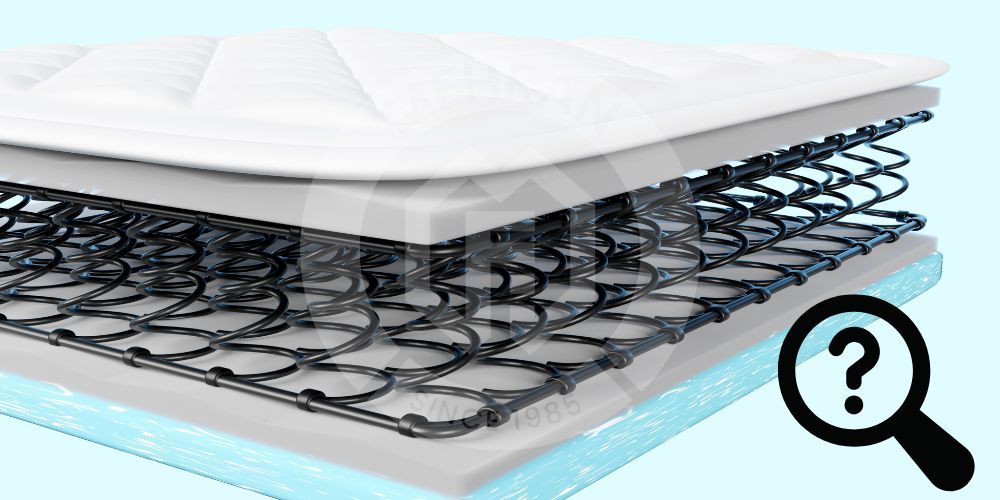
How Many Springs in a Good Mattress?
When people like us decide to buy a new mattress, we often have this concern about how many springs in a good mattress. The reason is comfort and durability as they’re the most important factors that influence our buying decisions. Therefore, the understanding of this particular detail is highly significant. The number of springs in the mattress defines its supportiveness, longevity, and quality of sleep. Let’s do a more detailed dive into this subject to help you make an informed choice.
Why Is The Number of Springs Important?
The springs inside the mattress are used for support and comfort. When it comes to mattress springs, it’s not about how many springs in a mattress are optimal but how it is distributed and designed individually. Generally speaking, the more springs that are present in a mattress, the more supportive it will become for pressure relief but as said earlier distribution of the springs is key for optimal comfort. Furthermore, everything is taken into consideration, from the quality of the springs to the material the springs are made from, everything counts.
The Role of Springs in the Mattress
- Support: Springs distribute body weight to the surface of the mattress to support your pressure points and assist in spinal alignment accordingly.
- Durability: High-quality springs contribute to the life span of a mattress by allowing it to maintain its shape and firmness over a longer period.
- Motion Isolation: A high number of springs help isolate the movements of others on the bed. It’s great for couples.
- Comfort: There are so many different spring systems such as pocket springs and Bonnell springs. The feel and comfort level of these vary from each other. Some of those spring systems are designed for very plush comforts, while others will offer firmer support.
How Many Springs in a Good Mattress
When it comes to determining how many springs a mattress should have, there are several factors that influence that such as its mattress thickness and mattress design. When considering a good mattress, you would need at least 400-800 springs for a standard double or queen-size mattress, although this may be considered a variant depending on the type of spring system adopted. Let’s do the breakdown for spring count based on the most common spring types:
Bonnell Springs (Old/Traditional Springs)
Bonnell springs are used in lower-cost mattresses. They are usually made from a single wire that forms a coil and are laced together by a mesh for support across the mattress. A typical Bonnell spring mattress may have 300 to 600 coils in a double or queen-sized. Such a mattress is great for people who are looking to buy a mattress without breaking the bank. Although such type of mattress is not as supportive or durable as the pocket springs but it’s still decently comfortable.
Pocket Springs (Individual Coils)
Pocket Springs is the second level after Bonnel Springs. Each spring is individually wrapped in its own fabric pocket to allow each spring to individually move independently from its neighbor. This makes them perfectly suitable for more support and motion isolation. A genuine good-quality pocket spring mattress will contain anything between 800 to 2000+ springs, depending on the size of the mattress. Some luxury models boast upwards of 3000 springs as well. This type of mattress is best for people who sleep with a partner. They work well as well for those who require extra support for targeted pressure points, such as the lower back or the hips.
Continuous Coil Springs
These mattresses use a continuous piece of wire to make the continuous coil springs, and they are essentially a series of interconnected coils. They are very famous for their stability and support. Generally, continuous coil mattresses contain 400 to 800 coils. Such mattresses are best for back and stomach sleepers who want a balancing act on comfort and support. However, mattresses with continuous coil springs aren’t ideal for motion isolation. If anyone moves or jumps on the bed, you will feel their movement which gets quite irritable when you’re sleeping.
Hybrid Mattresses (Memory Foam + Springs)
Hybrid mattresses have combined the benefits of memory foam and innerspring coils. Sometimes, the spring system may vary, but hybrid mattresses usually tend to use pocket springs for support, with the memory foam layer acting for comfort and pressure relief. Usually, hybrid mattresses will carry anything from 600 to 2000+ springs depending on the model. It’s best for those who want the ultimate balance of support, comfort, and cooling. It’s just like having optimal support provided by the memory foam and motion isolation by pocket springs.
Is it Better to Have More Springs in a Mattress?
People usually believe that more springs necessarily mean a better mattress but here’s the truth; the quality of those springs alone counts for just as much as the quantity. For example, while a 1,000 low-quality type may seemingly be a good number, it cannot perform anywhere near as well as a mattress with 600 high-quality, individually wrapped pocket springs. Here is a breakdown of how the quality of springs affects mattress performance:
Coil Gauge
This refers to the thickness of the wire used in springs. The lower the gauge number, the thicker and stronger the wire will be, meaning the higher the number, the thinner the wire. As a rule, the thicker wires do provide more support and tend to last longer. Coil gauge runs from 12 to 18. The lower the gauge, the better the support; higher gauges translate to softer mattresses.
Spring Design
Pocket springs are much more supportive and comfortable than the more general Bonnell coils. Generally, high-range pocket springs are manufactured from strong steel, while low-end pocket springs are made of lower-quality wire that wears out fast.
A Quick Guide to Help You Choose The Right Number of Springs For Your Mattress
Choosing the exact number of springs involves mainly particularities related to your sleeping style and personal comfort.
If you sleep alone, you need a mattress having close to 600-800 pocket springs that can give you the right amount of support and comfort.
However, if you sleep with a partner then consider more than 1000 springs in your mattress. This will provide even better motion isolation for the two of you and individually customized support.
If you have any back or neck problems, then a mattress with a higher spring count and good-quality pocket springs is your best choice.
You can also try hybrid models with memory foam on the top to provide that extra layer of pressure relief.
Tips for Extending the Life of Your Mattress
Is your mattress starting to show signs of wear? Don’t rush into buying a new one just yet! With a few simple repairs, you can extend the life of your mattress and continue enjoying a good night’s sleep. Here’s how you can fix common mattress issues:
| Repair Method | Description | How It Helps |
| Repair Broken Springs | Use a mattress repair kit or consult a professional to fix or replace broken springs. | Fixes broken or loose springs to restore mattress support. |
| Fluffing the Mattress | Regularly fluff and rotate your mattress to evenly distribute pressure. | Prevents sagging and ensures even wear, prolonging the mattress life. |
| Fixing Tears in the Fabric | Use fabric glue or sew up small tears to prevent further damage. | Keeps dust and dirt out, preserving the mattress material. |
| Using a Mattress Topper | Add a memory foam or latex topper for extra cushioning and comfort. | Provides additional softness and reduces pressure on the mattress. |
For a more detailed step-by-step guide on how to repair your bed mattress, click here. These simple maintenance tips can make a big difference in keeping your mattress in great shape and extending its life without the need for costly replacements.
Conclusion
The point is that different mattresses contain different amounts of springs, but a good-quality mattress contains anything from 600 up to 2000, depending on the type of spring system and the size of the mattress. As a general rule, pocket springs give the best support, comfort, and motion isolation, while Bonnell springs are usually a more budget-friendly option for those buyers who have a very tight budget. Keep in mind that there is a lot of variation in the quality of springs, coil gauge, and overall construction, which is more indicative of quality than spring count.